Warning Signs for Tree Removal Safety
Tree Care, Hazardous Trees, Tree Removal, Safety
Warning Signs That a Tree Needs to Be Removed Before It Causes Damage
Recognizing when a tree has become hazardous is essential to protecting your home, your family, and your neighborhood. Trees Specialist Inc provides expert arboriculture and professional tree services to homeowners in the Greater Boston area—including Medford, Somerville, Cambridge, Arlington, Winchester, and surrounding communities—helping identify and safely remove dangerous, diseased, or dying trees before they fail and cause costly property damage.
Why Early Detection of Hazardous Trees Matters
Trees add shade, beauty, and value to your property—but when they become unstable, they can quickly turn into liabilities. High winds, heavy snow, and saturated soil are common in Massachusetts. A compromised tree in these conditions can fail without warning, leading to roof damage, broken windows, crushed vehicles, or injuries. Proactive tree care, guided by a certified arborist, reduces these risks and supports the long-term health of your landscape.
Structural Warning Signs You Should Never Ignore
Structural problems are some of the clearest indicators that a tree may need to be removed. If you notice any of the following, schedule a professional tree inspection as soon as possible:
- Significant lean: A tree that suddenly begins leaning, or whose lean is increasing over time, may have root or trunk failure. This is especially concerning when the lean is toward a house, driveway, or power line.
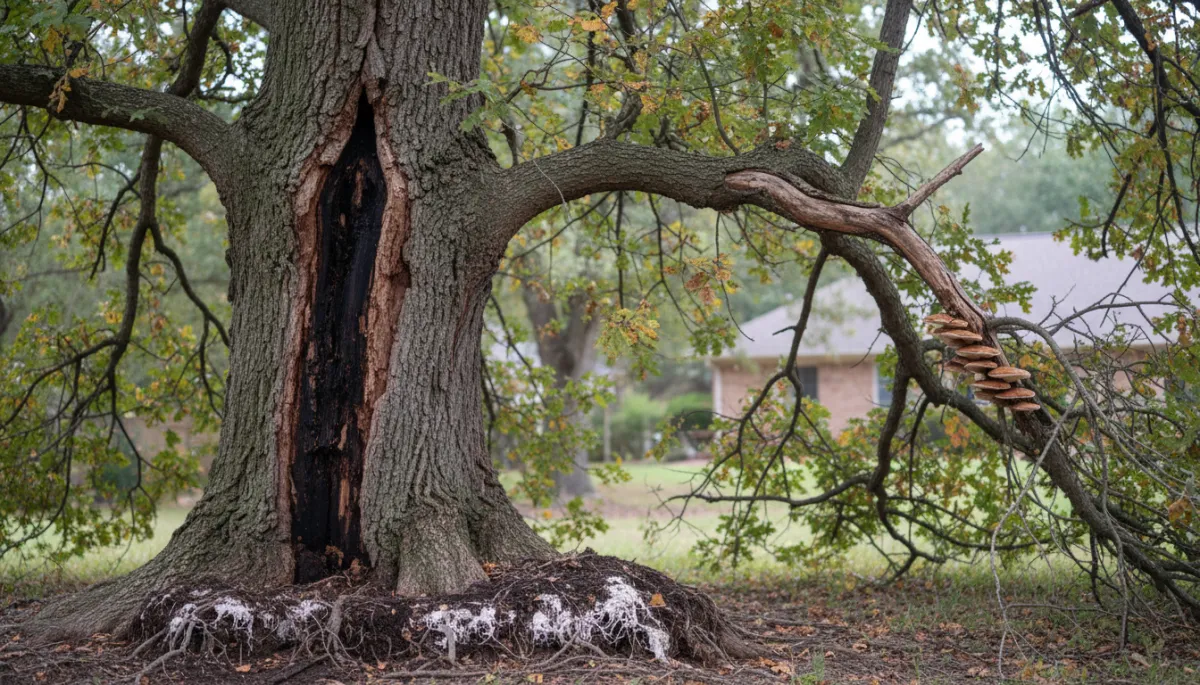
- Cracked or split trunk: Vertical cracks, deep splits, or large cavities in the trunk weaken the tree’s core structure. In storms, these defects can cause the tree to snap at the damaged point.
- Broken or hanging branches: Large dead or broken limbs, especially over roofs, sidewalks, or play areas, are serious hazards. They can fall without warning—even on calm days.
Root and Soil Issues That Compromise Stability
Roots anchor a tree and absorb the water and nutrients it needs. When the root system is damaged or decaying, the entire tree becomes unstable. Warning signs include:
- Heaving or cracked soil: Raised soil, newly formed gaps on one side of the trunk, or cracks radiating from the base may indicate that the root plate is lifting—a precursor to uprooting.
- Visible root decay: Mushrooms, soft wood, or a spongy feel at the base of the tree suggest advanced rot. Diseased trees with root decay often fail with little external warning.
- Recent excavation or construction: Trenching, utility work, and driveway installation can sever major roots. A professional arborist can evaluate whether the damage is severe enough to justify removal.
Recognizing Diseased Trees Before Decline Accelerates
Tree diseases are common in New England’s climate. Some can be managed with proper tree care, while others progress quickly and create dangerous conditions. Key symptoms of diseased trees include:
- Patchy or thinning canopy: Sections of the crown that fail to leaf out, produce undersized leaves, or brown prematurely may indicate internal decay or vascular disease.
- Cankers and oozing bark: Sunken areas, cracks, or areas of bark exuding sap are often associated with fungal or bacterial infections that weaken structural integrity.
- Fungal growth on trunk or roots: Conks, brackets, and other fungal bodies are red flags. They usually signal advanced internal decay that cannot be reversed.
Proper arboriculture practices—such as timely pruning, soil care, and monitoring—can sometimes save a stressed tree. However, when disease is extensive, professional tree removal is often the safest and most responsible option to prevent property damage and protect nearby trees from infection.
Signs of a Dying Tree That May Require Removal
Dying trees rarely recover on their own. Over time, their branches become brittle, their root systems weaken, and their risk of failure increases. Indicators that a tree is in irreversible decline include:
- Extensive deadwood: If more than 50% of the crown is dead or dying, the tree is unlikely to rebound, and removal should be considered, particularly near structures or high-traffic areas.
- Peeling or missing bark: Large areas of missing bark, known as “bark sloughing,” suggest that vital tissues have died. This significantly weakens the trunk.
- No new growth: A tree that fails to produce new shoots, leaves, or buds for multiple seasons is most likely dying and should be evaluated for removal.
Balancing Safety, Property Value, and Tree Preservation
Not every problem tree must be removed. In some cases, targeted pruning, cabling, or bracing can reduce risk while preserving a valued tree. An experienced tree service company, such as Trees Specialist Inc, will assess each situation individually—considering the tree’s health, its location, its species, and your goals for the property. When removal is recommended, it is because the safety risks and potential property damage outweigh the benefits of keeping the tree.
Why Professional Tree Services Are Essential for Hazardous Removals
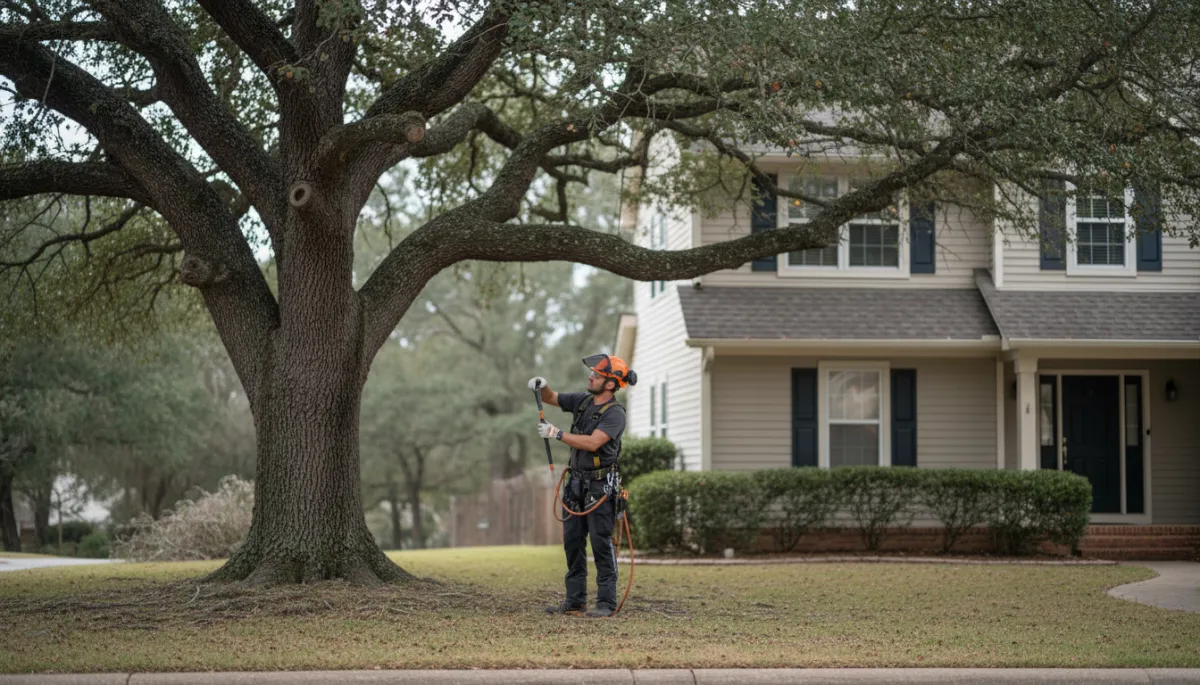
Tree removal—especially of large, hazardous trees near homes or power lines—is not a do-it-yourself project. It requires specialized equipment, technical climbing skills, and a deep understanding of arboriculture and safety protocols. Professional services from a fully insured company protect you from:
- Injury risks: Falls, chainsaw accidents, and unstable branches are serious hazards for untrained individuals.
- Unintended property damage: Improper cuts can cause trunks or limbs to fall in unpredictable directions, damaging roofs, fences, or neighboring properties.
- Liability concerns: Working with a licensed, insured tree service in Medford, Somerville, Cambridge, and nearby cities helps ensure that you are protected if something goes wrong on-site.
When to Call Trees Specialist Inc for an Evaluation
If you suspect that a tree on your property may be hazardous, diseased, or dying, do not wait for the next storm to test it. Schedule a professional assessment if:
- A tree is leaning toward your home, driveway, or neighbor’s property.
- You notice dead branches over roofs, walkways, or play areas.
- There are signs of decay, fungus, or extensive bark damage at the trunk or roots.
Trees Specialist Inc provides comprehensive tree care—from pruning and maintenance to safe, efficient tree removal and stump grinding—throughout Medford, Somerville, Cambridge, Arlington, Winchester, and neighboring Massachusetts communities. Their goal is to help homeowners maintain healthy, beautiful trees while prioritizing safety and preventing avoidable property damage.
Protect Your Home with Proactive Tree Care
Understanding the warning signs that a tree needs to be removed empowers you to act before a problem becomes an emergency. By watching for structural defects, root issues, disease symptoms, and signs of decline—and by partnering with a trusted local tree service—you can safeguard your property, enhance curb appeal, and support a healthy urban forest in your community. When in doubt, contact a professional arborist for an honest, expert evaluation and clear recommendations tailored to your landscape.
SEO Title: Warning Signs a Tree Needs to Be Removed | Trees Specialist Inc Medford MA
Meta Description: Learn how to spot hazardous, diseased, and dying trees before they cause property damage. Trees Specialist Inc offers professional tree removal and tree care services in Medford, Somerville, Cambridge, Arlington, Winchester, and surrounding Massachusetts communities.
